
Yelp is licensing its reviews, ratings, photos, and business information to OpenAI, giving ChatGPT access to more real-time local business data. The agreement could change how consumers find local businesses through ChatGPT and create new opportunities and possibly challenges for businesses focused on local SEO.
Yelp Content Is Coming to ChatGPT
Under the partnership, ChatGPT will be able to use Yelp data when responding to local search queries. This includes information such as:
- Business information
- Yelp reviews
- Ratings
- Photos
- Local business details
- The Request a Quote feature
When Yelp content is used, Yelp links will appear in the ChatGPT chat.
This is significant because ChatGPT can now cite Yelp for local business information when users ask questions such as:
- “What are the best restaurants near me?”
- “Find a highly rated plumber in my area.”
- “Which local businesses have the best reviews?”
Rather than relying solely on its existing sources of information, ChatGPT will have access to Yelp’s extensive local business database.
ChatGPT Could Become Another Local Search Channel
For years, Google has dominated local search through Google Search and Google Maps. Consumers typically search for a business, compare reviews, look at photos, check hours, and ultimately contact or visit the business.
Now, consumers can search ChatGPT for local businesses such as restaurants, plumbers, self-storage facilities, and more, with ChatGPT able to source Yelp data when presenting results.
Yelp’s Request a Quote Feature Is Also Coming
The partnership goes beyond reviews and business information. Yelp’s Request a Quote feature will also be available through ChatGPT for local service searches. That could allow users to go from search to action within ChatGPT.
For example, a user looking for a local contractor, consultant, or service provider could potentially find businesses through ChatGPT and then request a quote without having to conduct a traditional Google search first.
This is an important development for local businesses because visibility in AI search may increasingly influence not only website traffic but also leads and customer inquiries.
What Does This Mean for Local SEO?
The rise of AI search does not mean traditional local SEO is dead. In fact, it could make local SEO even more important. Businesses need accurate and consistent information across the platforms that AI systems use to understand local businesses.
That includes:
- Maintaining an accurate Google Business Profile
- Keeping Yelp information up to date
- Building a strong review profile
- Adding high-quality photos
- Maintaining consistent business information across directories
- Creating useful, locally relevant website content
- Earning authoritative mentions and links
- Providing clear information about products and services
The key difference is that businesses are no longer optimizing only for a search engine results page. Businesses will need to make their businesses visible to search engines as well as potentially to AI platforms such as ChatGPT.
Is ChatGPT or Yelp a Good Source of Local Search?
There have been ongoing concerns and complaints about Yelp’s review practices, including allegations from some businesses and users that positive reviews have been filtered or hidden. Discussions and complaints about these experiences can also be found across forums such as Reddit.
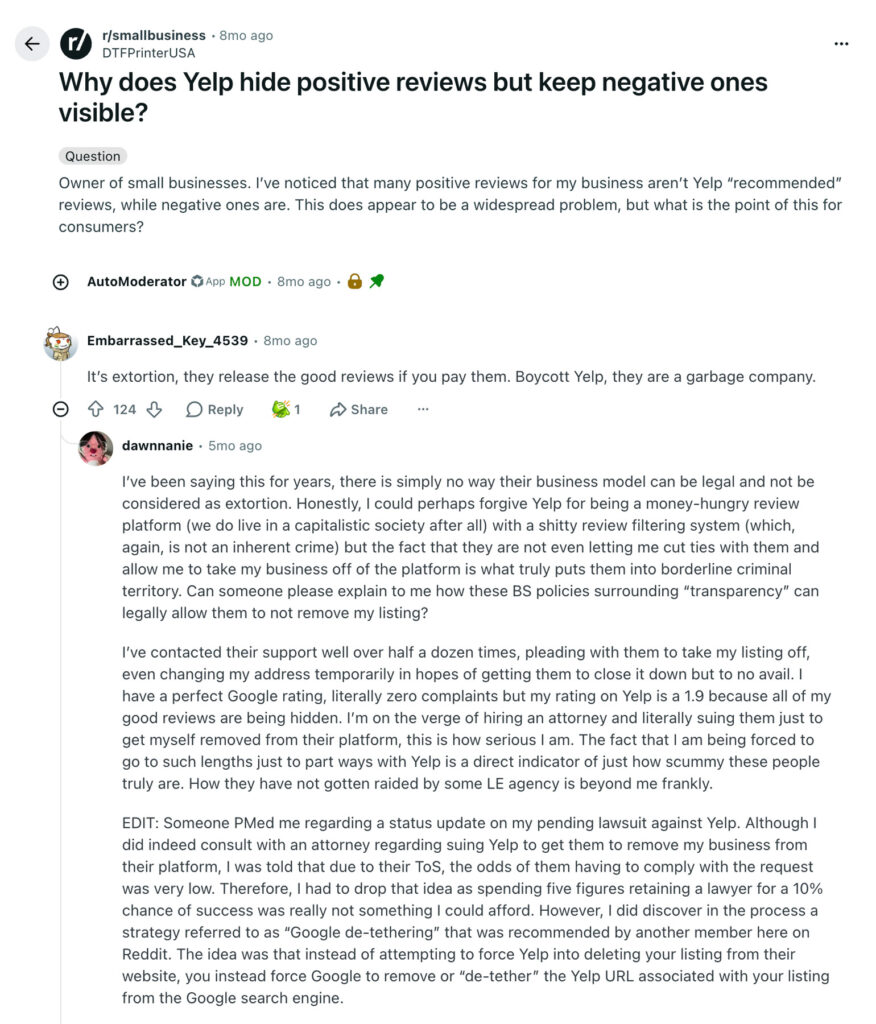
Even with the ChatGPT-Yelp partnership, it remains debatable whether businesses should invest heavily in building their presence on Yelp, particularly if they have concerns about how their reviews are displayed or managed.
We know of businesses personally that do not want to have any interaction with Yelp.
Time will tell whether Yelp changes its business practices to encourage more businesses to use its review platform. As ChatGPT and other AI platforms increasingly become sources of local business information, the quality, transparency, and trustworthiness of the data they use will become increasingly important.
For businesses, the key question may not simply be “Where should we get reviews?” but rather “Which platforms can we trust to accurately represent our business to both consumers and AI platforms?”