
AI has made content creation faster and more accessible than ever. From blog posts and product descriptions to FAQ pages, businesses are using AI more to produce content at scale. However, recent Google manual action has brought up an important question for marketers: is Google starting to treat certain AI-generated content as thin content?
While Google has consistently stated that AI-generated content is not inherently against its guidelines, recent events suggest that content quality, originality, and value continues to be more important than ever.
A Recent Google Manual Action Raises Questions
In July 2026, the owner of a long-established online forum reported receiving a Google manual action in Google Search Console for “Thin content with little or no added value.” The action affected an entire section of the website containing hundreds of thousands of forum discussions spanning nearly two decades.
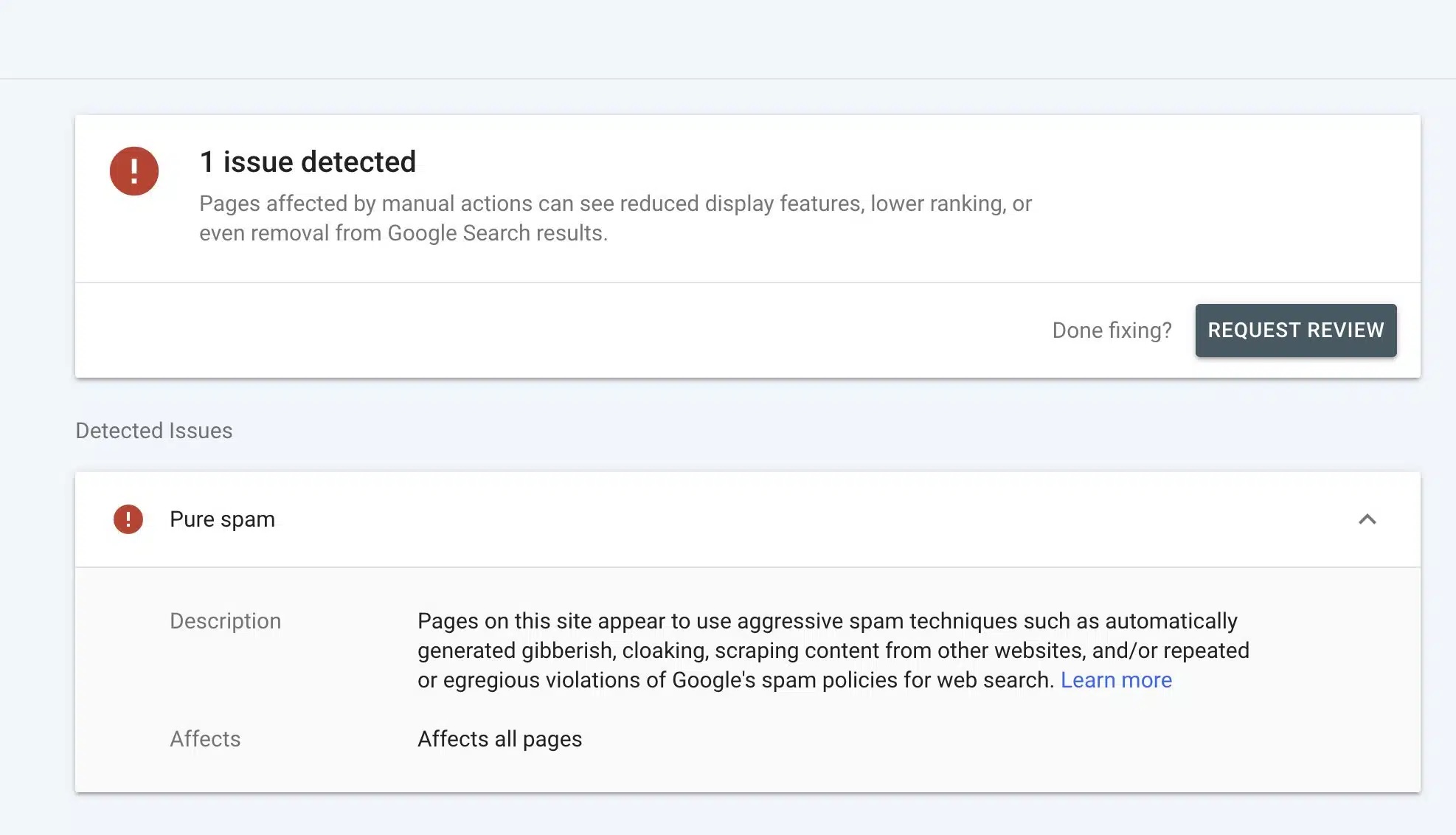
What caught the SEO community’s attention wasn’t just the manual action, it was speculation that a large volume of AI-generated forum responses may have contributed to Google’s decision.
According to discussions within the SEO community, the forum had deployed an AI chatbot that had published more than 100,000 replies since 2023.
Although Google has not confirmed that AI was the reason for the manual action, the situation reinforces an important point which is that content should offer original value rather than repeating information that’s already available elsewhere.
AI Isn’t the Problem. Low-Value Content Is
Google has repeatedly stated that it evaluates content quality, not the method used to create it.
That means AI can absolutely be part of an effective content strategy. The problem occurs when AI is used to mass-produce pages that offer little unique insight, expertise, or practical value.
Examples include:
- Generic articles that summarize information already found on competing websites.
- Thousands of near-identical location or service pages with only slight wording changes.
- AI-generated forum replies that don’t reflect genuine experience or expertise.
- Content created solely to rank in search engines rather than help users.
Whether written by a human or AI, this type of content offers limited value to searchers.
What Google Rewards for Better SEO Performance
Google’s search systems continue to prioritize content that demonstrates:
- Original insights
- Expertise
- Insightful analysis
- Clear answers to users’ questions
Businesses that combine AI with human expertise are generally in a much stronger position for long-term SEO success than those relying entirely on automation.
What This Means for Your SEO Strategy
If your website relies heavily on AI-generated content, now is a good time to review your content.
Ask yourself:
- Does this page answer questions better than competing pages?
- Does it include original insights or real-world experience?
- Would someone bookmark or share it because it’s genuinely useful?
- Does it reflect your organization’s expertise?
If the answer is no, it may be worth revisiting and improving those pages before they become a liability.
The recent Google manual action serves as a reminder that Google’s focus hasn’t changed.
Search engines are becoming better at identifying content that lacks originality and meaningful value. While AI can significantly improve efficiency, it shouldn’t replace authentic expertise, thoughtful analysis, or unique perspectives.
The businesses that will succeed in the AI era won’t necessarily be those producing the most content. It’ll be businesses that produce the most helpful content.
As AI continues to change digital marketing, one principle remains constant: create content for people first, and use AI to support the process rather than replace it.